2026 Professional Development Webinar Series
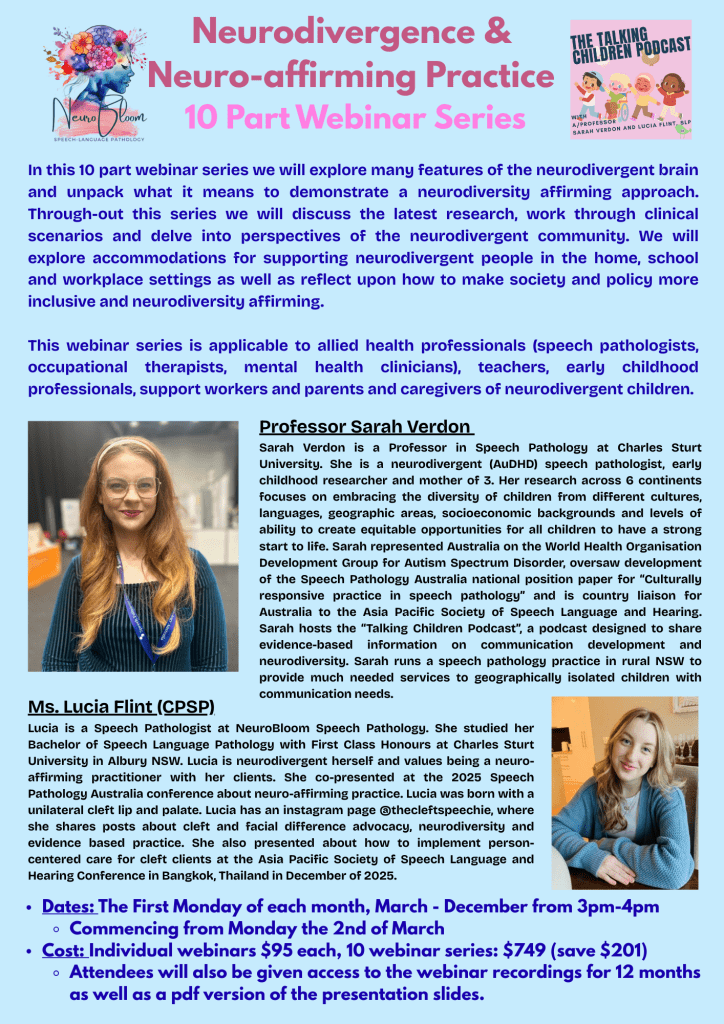
Webinar outline
Topic 1: What is neurodiversity?: Monday 2nd of March
In this session we explore the diagnostic criteria for a number of forms of neurodivergence including Autism, ADHD, Dyslexia, Dyscalculia, Dyspraxia, Tourette’s syndrome and more. We explore the latest neuroscience to understand the neurodivergent brain and its hereditary nature. We also look at family centred care when it comes to accepting a diagnosis of neurodivergence.
Topic 2: Understanding the features of the neurodiverse brain: Monday 6th of April
In this session we will discuss the many features of neurodivergence such as empathy, literacy, social engagement, etc and learn how each of these features exists on a spectrum. Each neurodivergent has a unique combination of these features to differing degrees. We will learn how to map an individual’s brain against these features to understand their unique profile of neurodiversity.
Topic 3: Sensory processing and sensory preferences: Monday 4th of May
In this session we will explore the way that sensory seeking and sensory avoidant behaviours present in neurodivergent individuals, we will explore the five senses as well as the concept of interoception. We will also discuss how to accommodate sensory preferences to create a neuro-affirming environment.
Topic 4: Pathological demand avoidance: Monday 1st of June
In this session we will explore Pathological Demand Avoidance (PDA) also known as a Pervasive Desire for Autonomy. We will discuss how PDA frequently occurs within neurodiverse children with Autism and ADHD, as well as the associated challenges. We delve into the underlying processes in PDA and helpful strategies to best support neurodivergent PDA people.
Topic 5: Avoidance Restrictive Food Intake Disorder (ARFID): Monday 6th of July
In this session we will discuss what ARFID is, including the diagnostic criteria. We will also explore the commonly co-occurring factors alongside ARFID and its prevalence within the neurodivergent community. We will unpack how ARFID is managed and treated including the professional involved with supporting people with ARFID.
Topic 6: Rejection Sensitivity Dysphoria (RSD): Monday 3rd of August
In this session we explore what rejection sensitivity dysphoria (RSD) is. We also unpack how this phenomena presents in the lives of neurodivergent people and the links to both mental and physical health. We learn about how neurodivergent people who experience RSD are best supported as well as the relevant professionals who may be involved in their care.
Topic 7: Neurodivergence and mental health: Monday 7th of September
In this session we explore the strong correlation between neurodivergence and mental health conditions such as depression, anxiety, eating disorders etc. We will also touch on the relationship between trauma and neurodiversity. We will discuss team-based treatment options including medication and other therapies that can support mental health.
Topic 8: Neurodivergence and chronic illness: Monday 5th of October
In this session we will explore the research on co-occurring conditions that frequently present with neurodivergence. These include chronic fatigue syndrome, fibromyalgia, gastrointestinal issues, cerebral palsy and reproductive issues. We look at the genetic factors that contribute to these co-occurrences and why we need to consider them in order to provide client centred care.
Topic 9: Girl-tism – the gender bias in neurodiversity research: Monday 2nd of November
In this session we will discuss how long held stereotypes and gender bias have impacted upon the experience of neurodivergent girls, women and gender diverse individuals. We will investigate the gender gaps in research on neurodivergence. We will explore how neurodivergence can present differently in those who are not male and how this has been an obstacle to timely diagnosis and support.
Topic 10: Accommodations for a neurodiversity affirming society: Monday 7th of December
In this final session we will consider all that we have learned and look at how we can take a neuroaffirming approach to accommodating the unique needs of neurodivergent individuals. We will discuss accommodations in school, the home, the workplace and social situations. We will also look at the role we can advocate for a more inclusive world.
Bespoke Professional Development

I offer professional development in both in person and online formats.
Courses range from 2 hours to 2 days in length, depending on your needs.
I offer professional development to speech-language pathologists, teachers, early childhood professionals, allied health professionals, medical professionals and parents/families on the following topics:
- Neurodiversity affirming practice
- Understanding Autism and ADHD
- Early communication development
- Culturally responsive practice
- Multilingualism
- Supporting home language maintenance
- Speech and language disorders
- Qualitative and quantitative research
Contact svpspeechpathology@gmail.com for pricing, availability and further information
 Professor Sarah Verdon - Speech-Language Pathologist